
With most of the club professionals de-mobbed and back at Old Trafford, Busby relied upon the players that had graduated through the war time regional competitions. The average age of the side was just 27, with only two players, Jack Warner and Jimmy Delaney, over 30 years old.
United found a rich vein of form from the start, and they were one of four sides that battled throughout the season for the title. Their challenge was effectively ended by a 1-0 defeat at Liverpool, Busb's former club, on May 3rd. Earlier in the saeason, United had beaten Liverpool 5-0 at Old Trafford.
The defeat at Anfield was the club's only loss in their final twelve games. Five points in the final three games secured United the runners up spot behind the new champions, Liverpool.
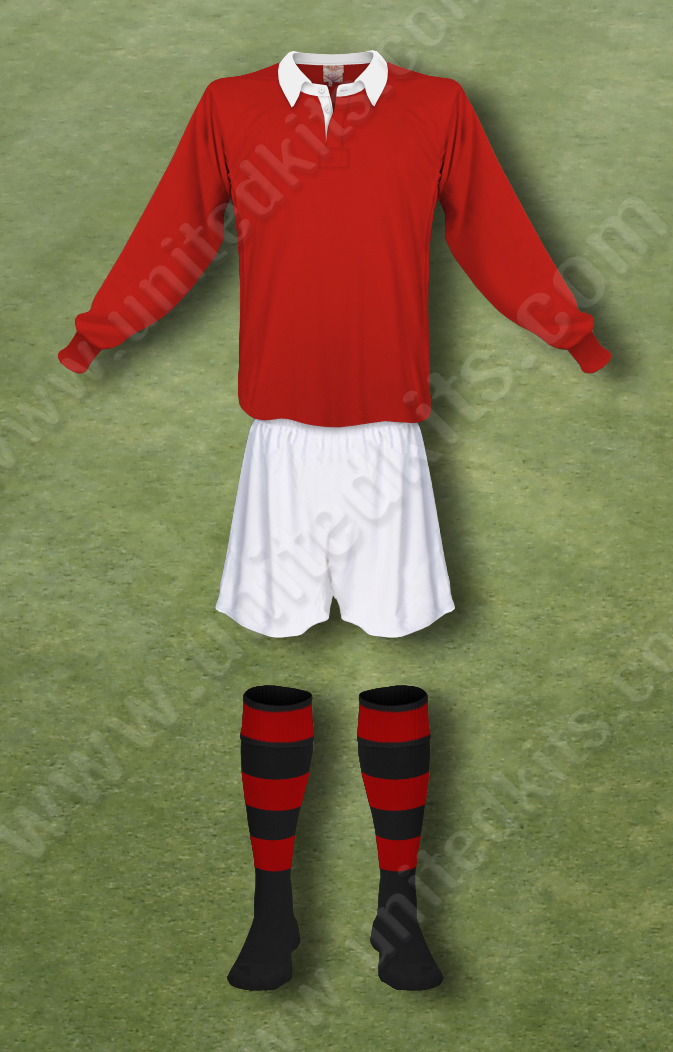
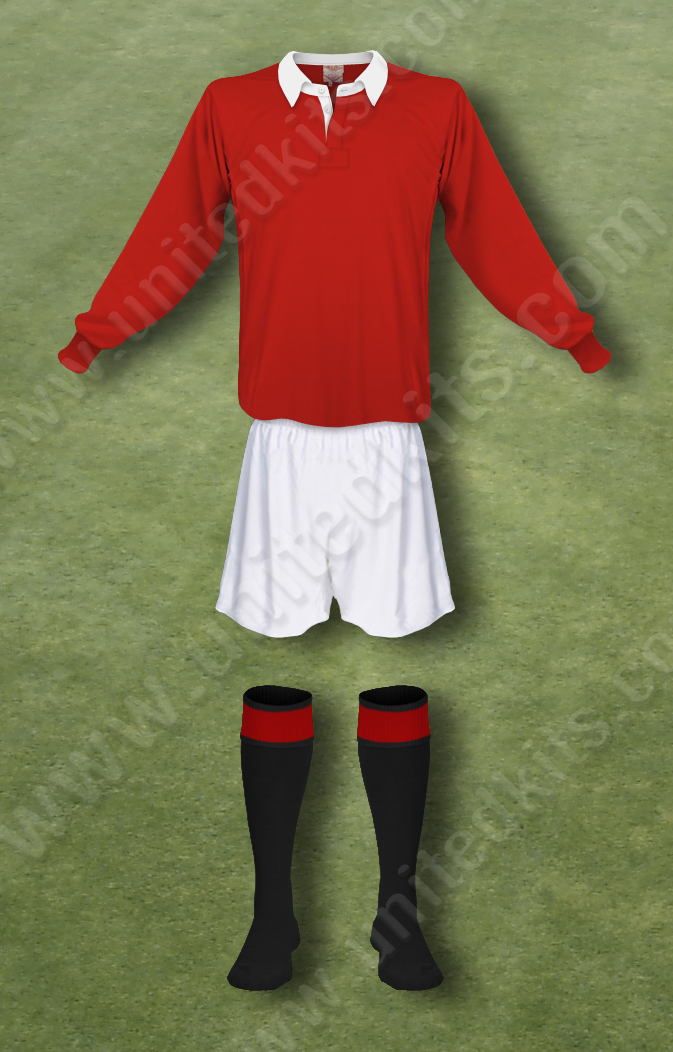
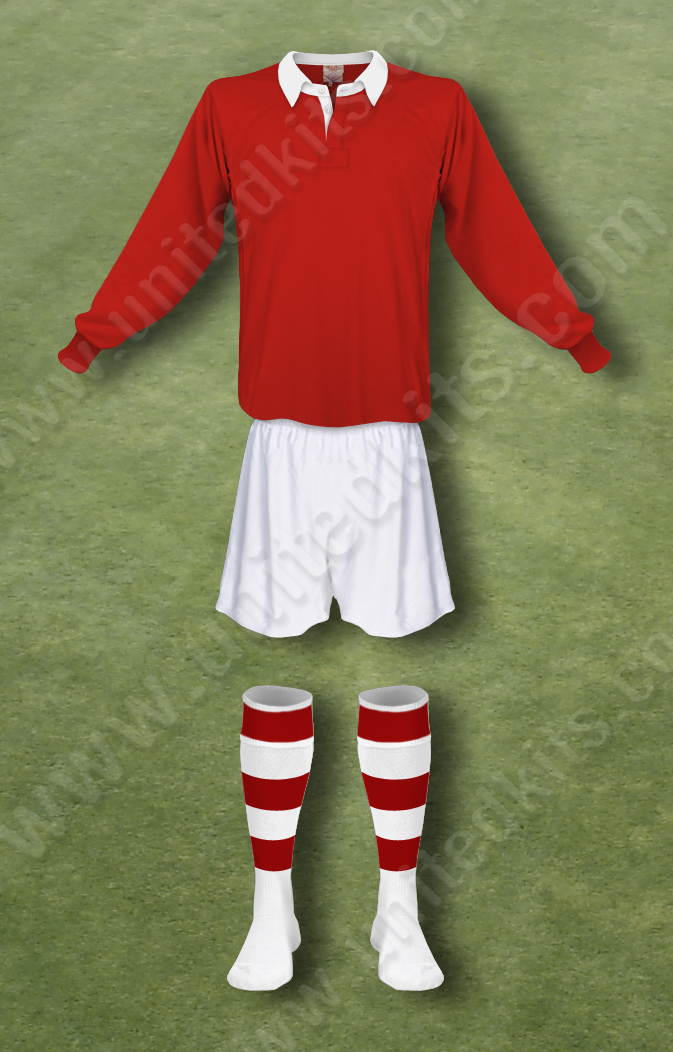
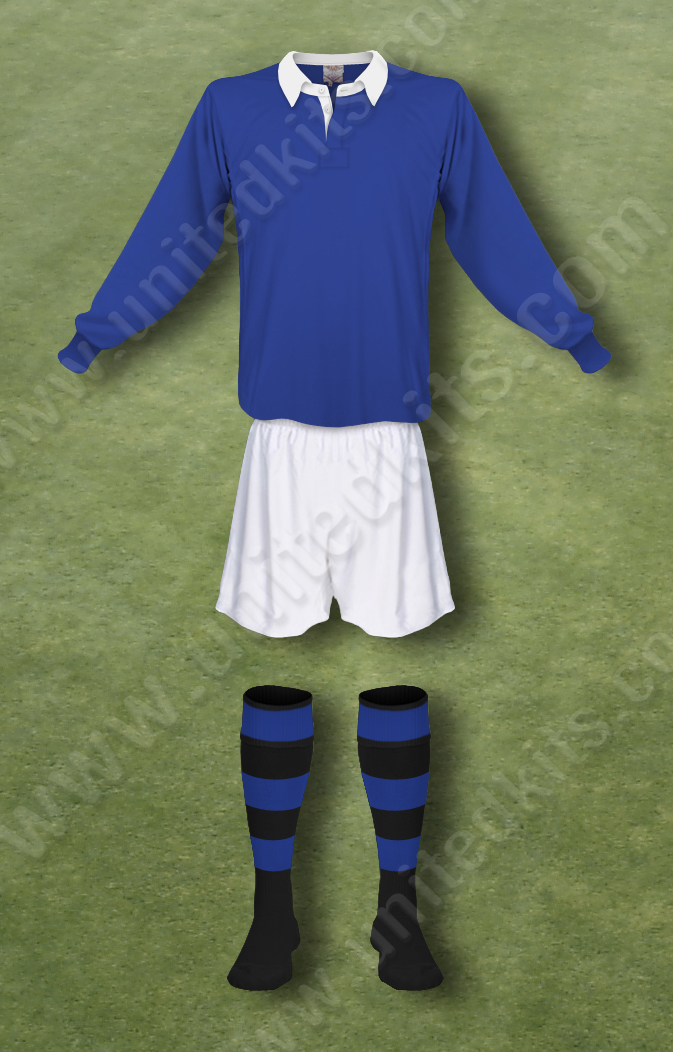
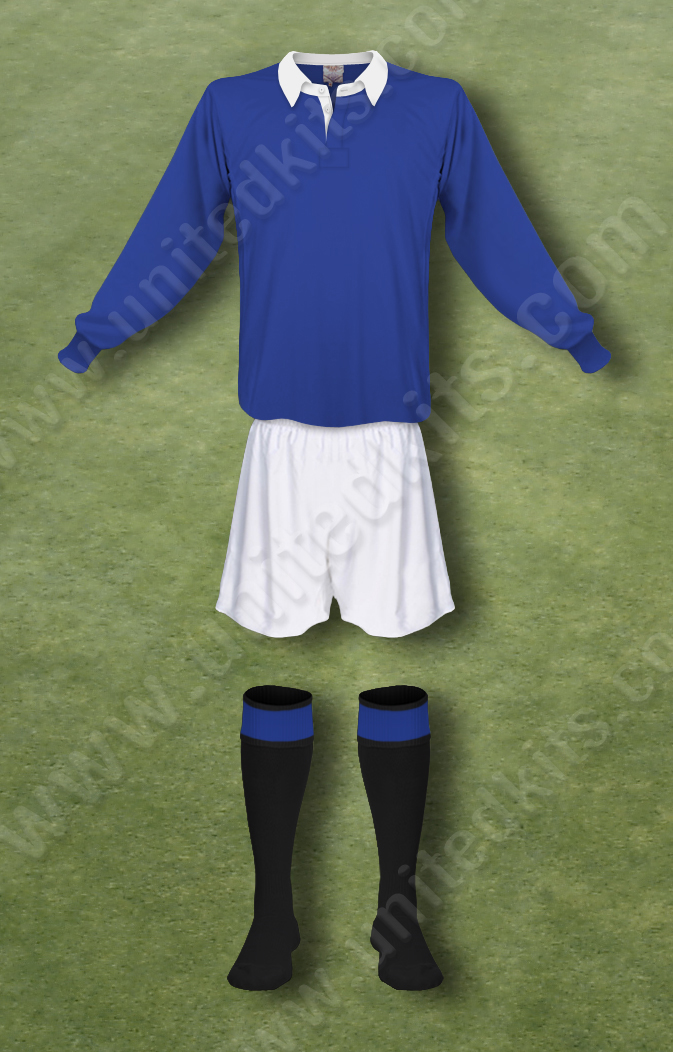
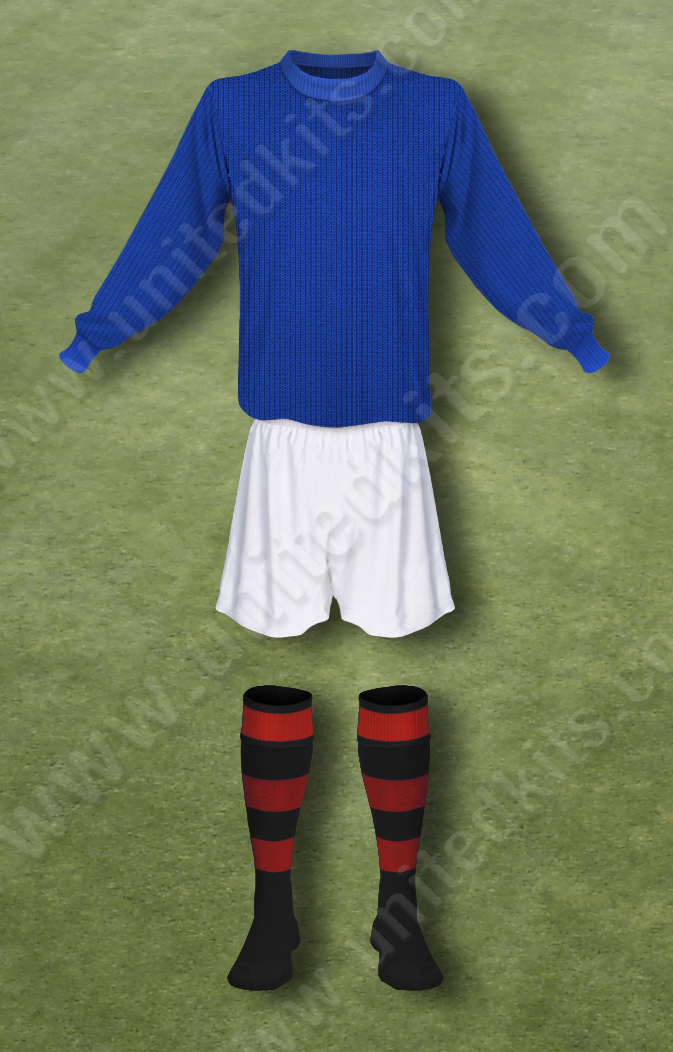
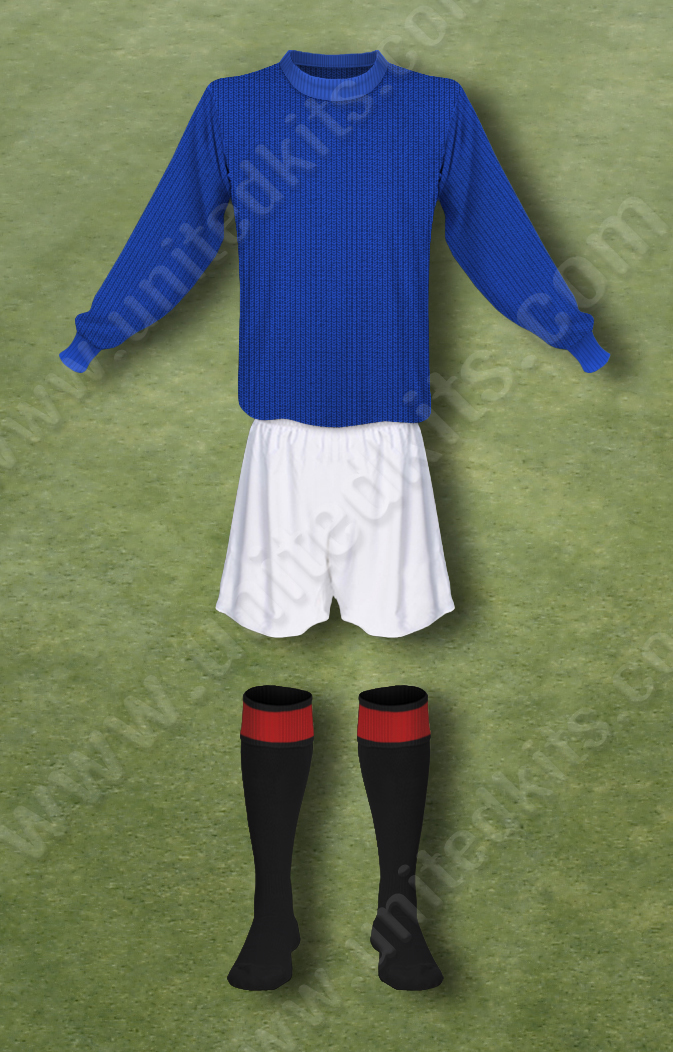
United retained their pre war home colours, albeit worn with a variety of different socks. The change kit was also standardised, with a blue 'Tangeru' shirt, worn with white shorts.This kit was probably first worn in the game at the Valley against Charlton Athletic on September 7th 1946. Both kits were manufactured by Umbro.
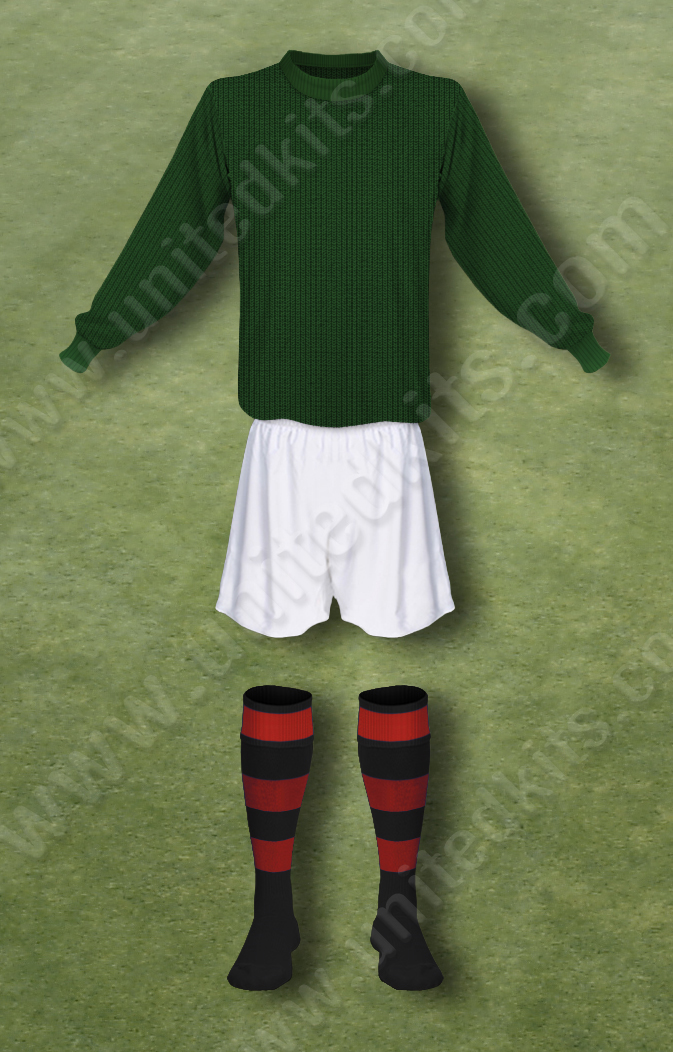
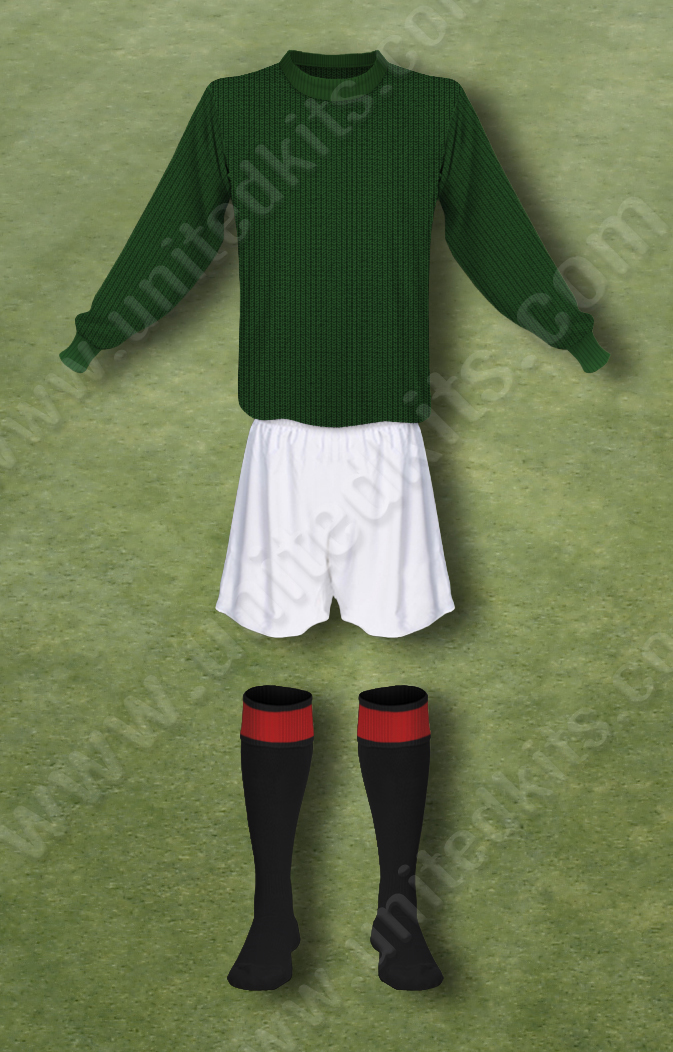
The side wore a variety of socks. Clothes rationing, which lasted in Britain until 1949, was probably the reason for these varieties, and an early post war programme appealed for supporters to donate clothing ration coupons. As well as the more common red/black hooped socks, we know that United wore red/white hooped socks on at least one occassion, against Wolves at Old Trafford in April 1947. Alex Howells has sent us a photo taken before either the home game against Brentford or the away game at Ewood Park in December 1946, that show United wearing the red/black hooped socks. Plain black socks also worn probably.
Heavy woollen green jerseys had been adopted almost universally by League clubs as the standard goalkeeper's kit. The only differences were to the material (coarser or finer, largely depending upon a club's financial state), and the depth of the polo neck.